Acid Protease for Alcohol Production
Troubleshoot acid protease for alcohol production with practical pH, temperature, dosage, QC, pilot validation, and supplier checks.
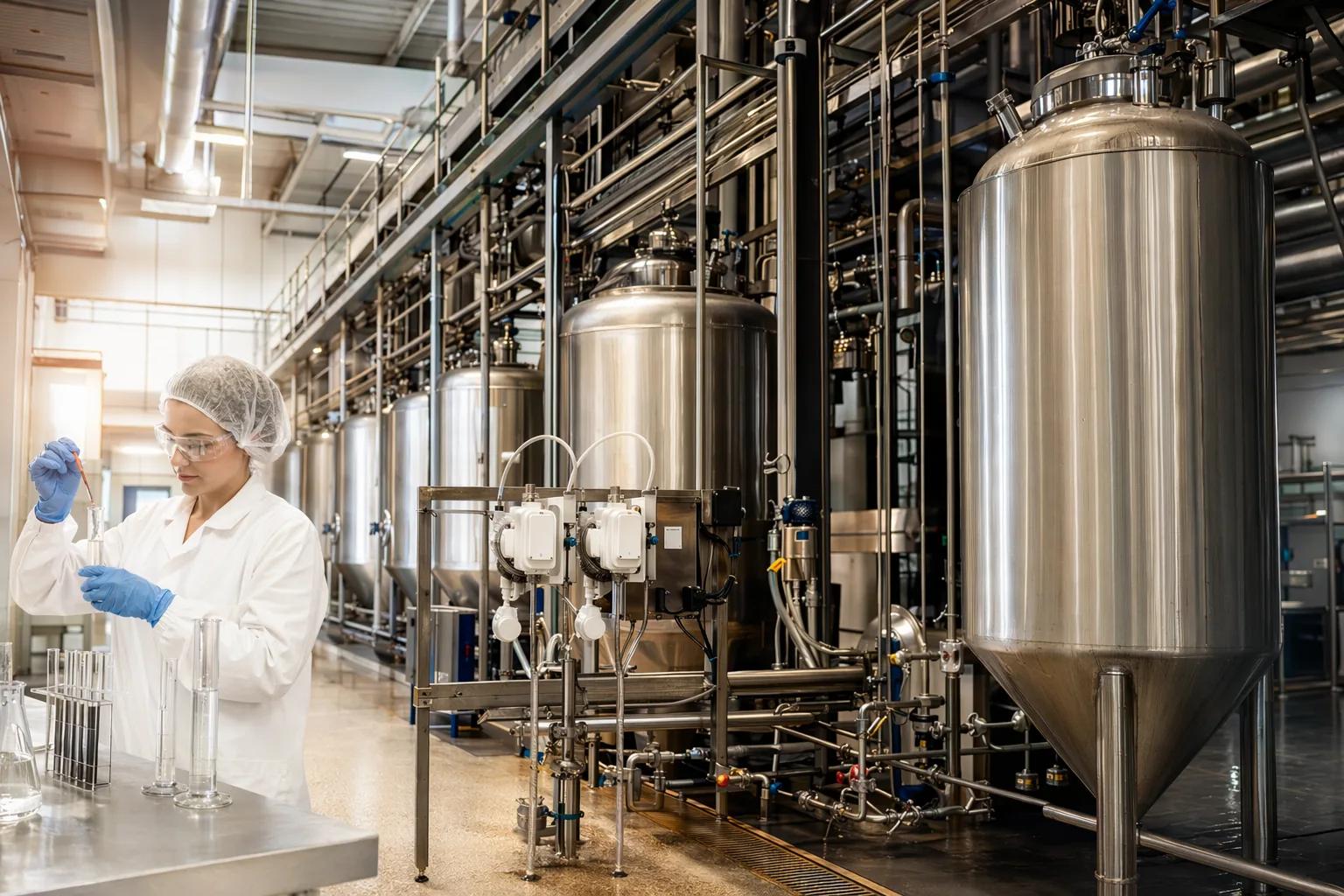
Improve mash protein breakdown, fermentation consistency, and cost-in-use with practical guidance for selecting and validating industrial acid protease.
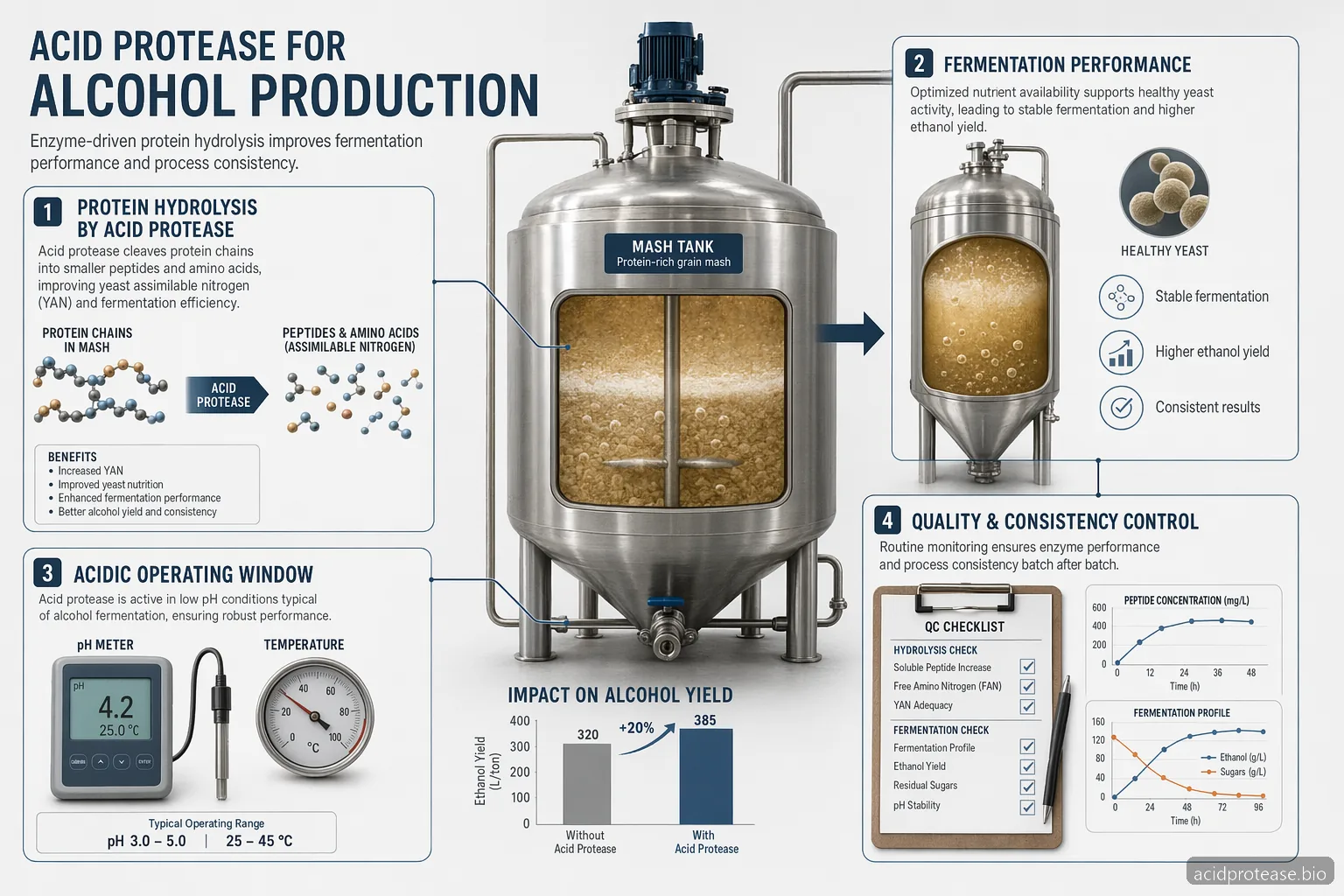
Why Acid Protease Is Used in Alcohol Production
In alcohol production from grain, tubers, or other protein-containing feedstocks, proteins can limit process efficiency by increasing viscosity, reducing nutrient availability, and creating variable fermentation behavior. Acid protease enzyme breaks peptide bonds under acidic process conditions, helping convert larger proteins into smaller peptides and amino nitrogen that yeast can use. For distilleries and bioethanol plants, the goal is not simply to add more enzyme; it is to match enzyme activity to mash pH, temperature, hold time, substrate composition, and downstream fermentation targets. When properly validated, acid protease for alcohol production can support smoother liquefaction or saccharification stages, more consistent fermentation kinetics, and better utilization of raw material protein. It is especially relevant when processing high-protein grains, variable raw material lots, or mashes where nitrogen availability fluctuates between batches.
Supports protein hydrolysis in acidic mash systems • Can help improve fermentable nutrient availability • Useful when raw material protein content varies • Should be selected for the actual plant process window
Troubleshooting Dosage: Start with a Controlled Trial
A practical starting dosage for industrial acid protease alcohol production trials is often expressed per metric ton of dry raw material or per ton of mash, depending on supplier convention. Many plants begin screening within a broad band such as 50-300 g per metric ton of dry substrate for liquid or powdered preparations, then adjust based on declared activity and process response. This band is not a universal recommendation; activity units, formulation strength, substrate protein, and residence time can change the effective dose significantly. If low dosage gives weak protein breakdown, check pH, temperature, mixing, and enzyme age before increasing addition rate. If high dosage gives little improvement, the enzyme may be outside its operating window or the process may be limited by another factor. Use small-scale and pilot validation to compare dosage against measurable gains, not only supplier averages.
Test at least three dosage levels plus a no-enzyme control • Normalize results by activity units where possible • Calculate cost-in-use per liter of alcohol or per ton of feedstock • Confirm dosing pump accuracy during plant trials
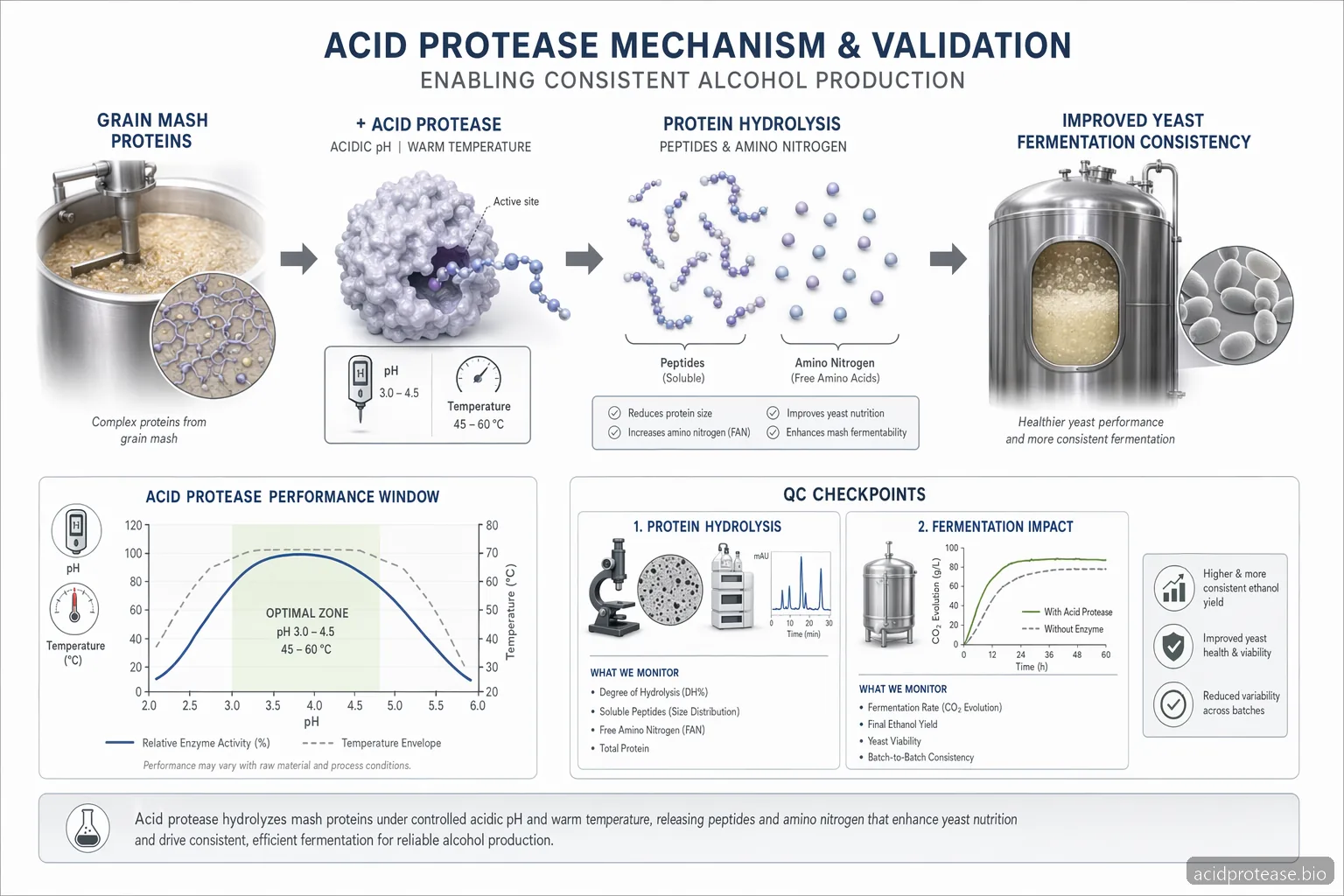
pH and Temperature Conditions That Affect Performance
Fungal acid protease commonly performs in acidic conditions, with many industrial products showing useful activity around pH 3.0-5.5 and an operating temperature range often near 35-60°C. Some formulations tolerate higher or lower conditions, so the product TDS should always define the expected range. In alcohol production, protease may be added during mash adjustment, saccharification, or early fermentation depending on the process design. If pH drifts above the enzyme optimum, hydrolysis may slow even when dosage is adequate. If temperature is too high, activity may decline through denaturation; if too low, reaction speed may be insufficient within the available hold time. For troubleshooting, record pH and temperature at the actual enzyme contact point, not only at the tank setpoint. Plant-scale gradients, poor agitation, or late acid addition can create results that differ from bench testing.
Typical working pH: about 3.0-5.5, product dependent • Typical working temperature: about 35-60°C, product dependent • Avoid prolonged exposure above the supplier's stability range • Measure conditions where the enzyme is actually dosed
QC Checks for Protein Hydrolysis and Fermentation Impact
A troubleshooting program should connect enzyme use to both hydrolysis indicators and fermentation outcomes. Useful QC checks include soluble protein, free amino nitrogen, peptide profile where available, viscosity, residual suspended solids, fermentation rate, final alcohol concentration, residual sugars, and by-product trends. For routine production, not every test is required daily, but pilot validation should define which measurements predict economic value. Compare treated and untreated mash under the same raw material lot, solids level, pH, temperature, and yeast conditions. If acid protease enzyme for alcohol production increases soluble nitrogen but does not improve fermentation, the yeast may already have sufficient nutrients or another bottleneck may dominate. If fermentation improves but cost rises too much, optimize dose or timing. The strongest validation links enzyme addition to stable operation, yield, throughput, or raw material flexibility.
Use untreated controls during pilot trials • Track both biochemical and production KPIs • Review yeast nutrition before increasing protease dose • Evaluate repeatability across multiple feedstock lots
How to Qualify an Industrial Acid Protease Supplier
Choosing an acid protease supplier for alcohol production should include technical, quality, and commercial evaluation. Request the COA for recent batches, TDS with activity definition and process guidance, SDS for handling and storage, recommended shelf life, packaging options, and batch traceability information. A reliable industrial acid protease supplier alcohol production program should also support pilot validation, sample evaluation, and practical troubleshooting around pH, temperature, dosage, and feedstock variation. Confirm whether the activity method is relevant to your process and whether units can be compared across products. Avoid decisions based only on price per kilogram; enzyme concentration, stability, dose rate, shipping conditions, and performance at plant pH determine cost-in-use. For long-term supply, assess lead time, documentation consistency, responsiveness, and ability to provide repeatable product quality without relying on unverifiable claims.
Request COA, TDS, SDS, and activity method • Compare cost-in-use, not only unit price • Validate supplier samples in your own mash • Check storage, shelf life, and batch traceability
Technical Buying Checklist
Buyer Questions
Many fungal acid protease products are designed for acidic mash conditions, commonly around pH 3.0-5.5. The best pH depends on the enzyme source, formulation, substrate, and residence time. During troubleshooting, measure pH at the actual dosing and contact point, not only in the control system. Always confirm the recommended range in the supplier's TDS before changing plant conditions.
Dosage must be validated against the declared activity and your raw material. A common trial approach is to test a low, medium, and high dose plus an untreated control, sometimes within a screening band such as 50-300 g per metric ton of dry substrate. Final dosage should be based on protein hydrolysis, fermentation results, and cost-in-use rather than a generic number.
Acid protease can support alcohol production by improving protein hydrolysis and nutrient availability, but yield improvement is process dependent. If fermentation is limited by yeast nutrition or mash viscosity, benefits may be visible. If another factor is limiting, such as starch conversion, contamination, or yeast stress, protease alone may not improve yield. Pilot validation is essential before full-scale purchasing.
A qualified acid protease enzyme supplier for alcohol production should provide a COA, TDS, SDS, activity method, storage guidance, shelf life, packaging details, and batch traceability. For procurement, also request a sample for pilot validation and clarify lead time, minimum order quantity, and technical support. Documentation consistency is important for supplier qualification and repeatable plant performance.
Fungal acid protease is commonly evaluated because many products work under acidic conditions found in mash and fermentation-related steps. Suitability depends on the specific enzyme activity, stability, pH range, temperature range, and compatibility with your feedstock and process timing. Review the TDS and run controlled trials before adopting any industrial acid protease enzyme alcohol production program.
Related Search Themes
industrial acid protease supplier alcohol production, industrial acid protease enzyme alcohol production, industrial acid protease alcohol production, acid protease supplier supplier for alcohol production, acid protease supplier for alcohol production, acid protease enzyme supplier for alcohol production
Acid Protease for Research & Industry
Need Acid Protease for your lab or production process?
ISO 9001 certified · Food-grade & research-grade · Ships to 80+ countries
Frequently Asked Questions
What pH is best for acid protease in alcohol production?
Many fungal acid protease products are designed for acidic mash conditions, commonly around pH 3.0-5.5. The best pH depends on the enzyme source, formulation, substrate, and residence time. During troubleshooting, measure pH at the actual dosing and contact point, not only in the control system. Always confirm the recommended range in the supplier's TDS before changing plant conditions.
How much acid protease enzyme should a distillery use?
Dosage must be validated against the declared activity and your raw material. A common trial approach is to test a low, medium, and high dose plus an untreated control, sometimes within a screening band such as 50-300 g per metric ton of dry substrate. Final dosage should be based on protein hydrolysis, fermentation results, and cost-in-use rather than a generic number.
Can acid protease improve alcohol yield?
Acid protease can support alcohol production by improving protein hydrolysis and nutrient availability, but yield improvement is process dependent. If fermentation is limited by yeast nutrition or mash viscosity, benefits may be visible. If another factor is limiting, such as starch conversion, contamination, or yeast stress, protease alone may not improve yield. Pilot validation is essential before full-scale purchasing.
What documents should an acid protease supplier provide?
A qualified acid protease enzyme supplier for alcohol production should provide a COA, TDS, SDS, activity method, storage guidance, shelf life, packaging details, and batch traceability. For procurement, also request a sample for pilot validation and clarify lead time, minimum order quantity, and technical support. Documentation consistency is important for supplier qualification and repeatable plant performance.
Is fungal acid protease suitable for industrial alcohol production?
Fungal acid protease is commonly evaluated because many products work under acidic conditions found in mash and fermentation-related steps. Suitability depends on the specific enzyme activity, stability, pH range, temperature range, and compatibility with your feedstock and process timing. Review the TDS and run controlled trials before adopting any industrial acid protease enzyme alcohol production program.
Related: Acid Protease for Acidic Processing Lines
Turn This Guide Into a Supplier Brief Request a technical acid protease sample, COA, TDS, SDS, and pilot trial guidance for your alcohol production process. See our application page for Acid Protease for Acidic Processing Lines at /applications/acid-protease-acidic-processing/ for specs, MOQ, and a free 50 g sample.
Contact Us to Contributehello@mail.acidprotease.bio