Acid Protease Production In Fungal Root Endophytes: Supplier Guide for Alcohol Production
Buyer guide to acid protease production in fungal root endophytes, enzyme specs, dosing, QC, and supplier selection for alcohol production.
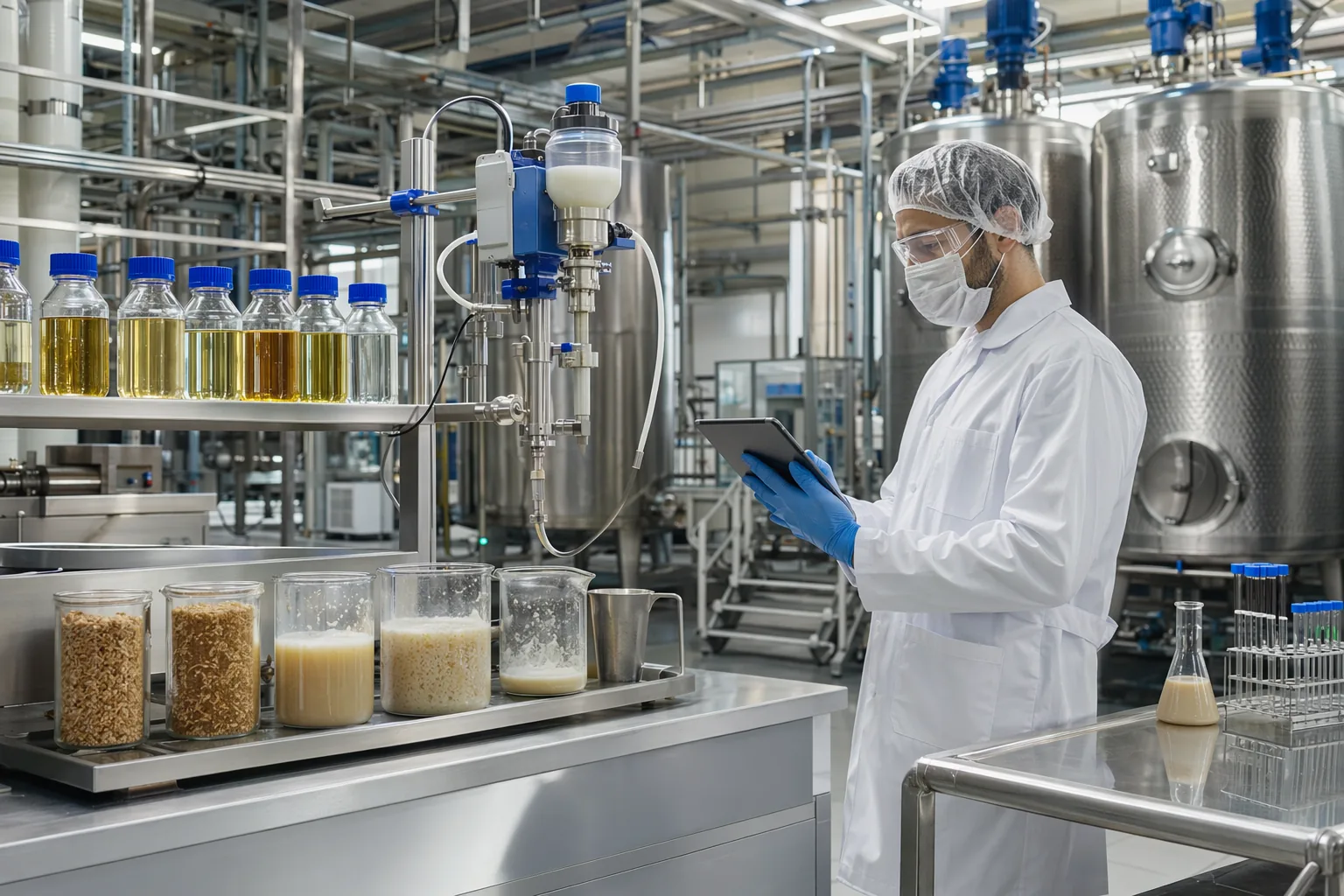
For distilleries and bioethanol plants, acid protease can improve nitrogen availability, protein breakdown, and fermentation consistency when it is selected, dosed, and validated against real mash conditions.
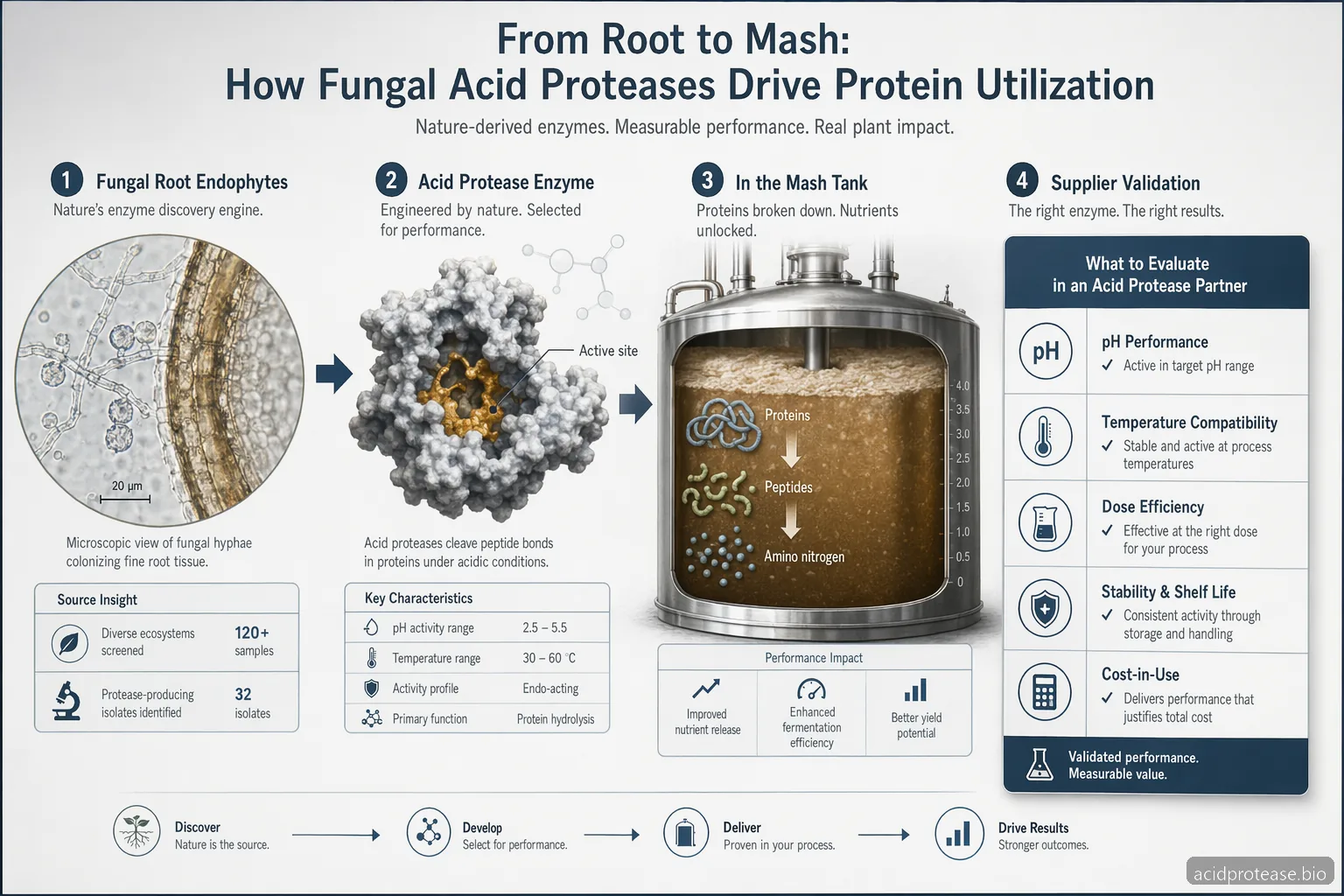
Why fungal endophyte research matters to enzyme buyers
Acid protease production in fungal root endophytes is mainly a discovery and screening topic: endophytic fungi can produce extracellular proteases under acidic conditions, and selected isolates may become candidates for industrial development. For a purchasing team, however, the commercial question is not simply whether a fungus produces enzyme. It is whether the acid protease enzyme can be manufactured consistently, formulated safely, documented properly, and shown to perform in the plant’s substrate. Literature on acid protease production by isolated species of Penicillium, Aspergillus, and other fungi can indicate useful pH tolerance or substrate range, but buyer decisions should be based on supplier data and plant validation. In alcohol production, the preferred product is usually a fungal acid protease with activity in acidic grain, cassava, molasses, or mixed feedstock processes. A strong supplier will connect strain capability with practical specifications, batch consistency, and process economics.
Treat endophyte origin as a strain-development clue, not a purchase specification. • Prioritize enzyme performance under your mash pH, temperature, solids, and residence time. • Request current COA, TDS, SDS, and recommended application data before trials.
Role of acid protease in alcohol production
In industrial acid protease alcohol production applications, the enzyme hydrolyzes feedstock proteins into peptides and amino nitrogen that may support yeast growth and fermentation robustness. The benefit depends on raw material protein level, endogenous nitrogen, yeast strain, nutrient program, and process design. Acid protease is often trialed in acidic mash conditions where it complements amylases and glucoamylases rather than replacing them. Typical evaluation points include free amino nitrogen increase, viscosity or solids handling changes, fermentation kinetics, residual protein, final ethanol concentration, and by-product profile. For plants seeking an industrial acid protease enzyme alcohol production solution, dosage should be tested across a practical band rather than assumed from another site. Corn, wheat, sorghum, cassava, and high-protein co-products can respond differently. The best outcome is not the highest enzyme dose, but the lowest cost-in-use that maintains stable fermentation and measurable plant value.
Common trial range: about 50 to 500 g enzyme preparation per metric ton of dry substrate, adjusted by activity and formulation. • Useful pH window often falls near pH 2.5 to 5.5, depending on the product. • Fermentation-side compatibility with yeast and nutrients should be confirmed.
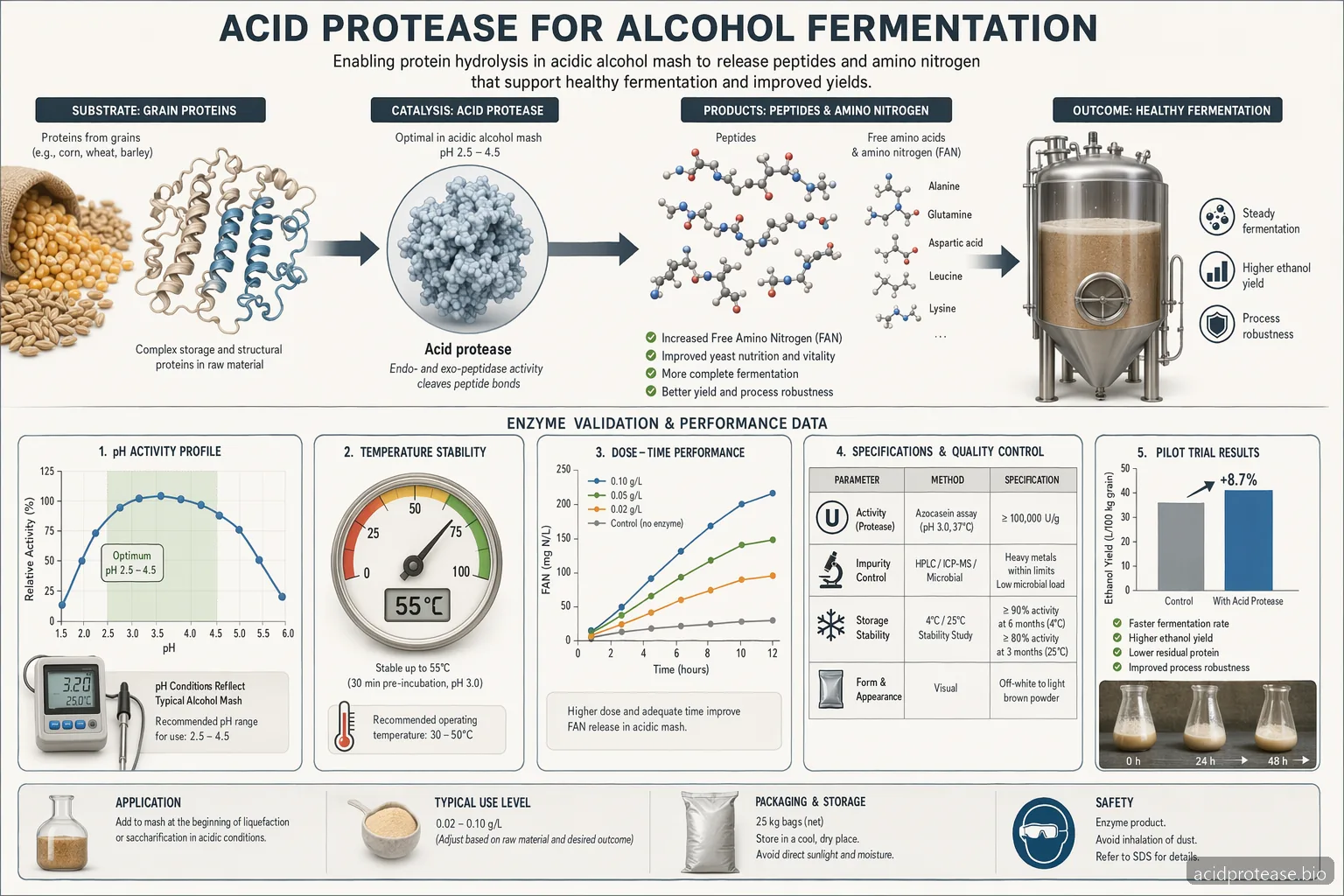
Process conditions and kinetics to validate
The process kinetics of acid protease production by Aspergillus niger and other fungi are important for manufacturers, but alcohol producers should focus on application kinetics: how fast the supplied enzyme hydrolyzes the plant’s protein under actual operating conditions. Bench tests should simulate mash solids, pH, temperature, shear, contact time, and the presence of ethanol or inhibitors where relevant. Many fungal acid proteases show useful activity in acidic environments and moderate temperatures, but heat stability and activity retention vary by product. For mash treatment, plants often assess activity around pH 3.0 to 5.0 and temperatures from 30 to 60 degrees Celsius. If enzyme is added before or during saccharification, confirm compatibility with liquefaction temperatures and hold times. If added closer to fermentation, confirm that it does not negatively affect yeast performance, foam control, or downstream separation. Kinetic data should be converted into plant metrics, not reviewed only as laboratory units.
Run time-course samples at 0, 30, 60, 120, and 240 minutes where practical. • Measure soluble protein, peptide formation, FAN, pH drift, and fermentation rate. • Compare enzyme-on versus enzyme-off controls using the same substrate lot.
How to specify an industrial acid protease supplier
Selecting an industrial acid protease supplier alcohol production partner requires more than a unit price comparison. Enzyme activity units can differ by assay method, substrate, pH, and temperature, so procurement should compare products on standardized application trials and delivered cost-in-use. Ask the acid protease supplier for alcohol production to provide a technical data sheet describing activity assay conditions, appearance, carrier or diluent, pH profile, temperature profile, solubility, recommended dosage, storage, shelf life, and handling precautions. The certificate of analysis should match the delivered lot and include activity, microbiological limits where applicable, and relevant physical parameters. The safety data sheet should support plant EHS review. Supplier qualification should also cover batch-to-batch consistency, change-control practices, packaging integrity, lead times, and technical response capability. Avoid vague listings such as “acid protease supplier supplier for alcohol production” without documentation, application data, or accountable technical support.
Request COA for each lot, not only a generic specification. • Confirm the activity assay and whether units are comparable across bids. • Check storage temperature, shelf life, packaging size, and logistics risk. • Require pilot support before committing to long-term supply.
Pilot validation and cost-in-use calculation
A disciplined pilot is the safest way to convert acid protease production claims into purchasing confidence. Start with a lab screen using the plant’s current substrate and process water, then move to a controlled plant trial if the results justify it. Test at least three dosages, including the supplier’s recommendation, a lower cost-saving level, and a higher stress-test level. Maintain consistent yeast pitch, nutrient addition, solids, temperature, and fermentation time. Track free amino nitrogen, soluble peptide profile if available, fermentation completion time, ethanol yield, residual sugars, volatile acidity, foam behavior, and coproduct quality. Cost-in-use should include enzyme price, dose, delivered logistics, handling, shelf-life loss, any process savings, and any yield or throughput improvement. A credible industrial acid protease alcohol production program should show repeatable benefit under normal variation, not only a single favorable trial.
Use replicated controls to separate enzyme effect from substrate variation. • Calculate cost per hectoliter of ethanol or per metric ton of feedstock. • Document acceptance criteria before the trial begins. • Review downstream impacts on stillage, DDGS, filtration, or wastewater.
Technical Buying Checklist
Buyer Questions
It is relevant mainly as a source of potential fungal strains and enzyme diversity. Endophyte studies can identify organisms that produce acid protease under low-pH conditions, but alcohol plants should buy based on commercial performance data. The enzyme still needs consistent manufacturing, formulation, safety documentation, and validation in real mash or fermentation conditions before it can be considered suitable for industrial use.
At minimum, request a technical data sheet, certificate of analysis, and safety data sheet. The TDS should state activity method, pH and temperature profile, recommended dosage, handling, storage, and shelf life. The COA should match the supplied lot and show activity and relevant quality parameters. The SDS supports environmental, health, and safety review before plant handling.
A practical starting screen is often about 50 to 500 g of enzyme preparation per metric ton of dry substrate, but the correct range depends on activity units, formulation, feedstock protein, pH, and contact time. Use supplier guidance as a starting point, then run low, medium, and high dosages against a no-enzyme control. Select the dose by cost-in-use and repeatable process benefit.
Usually no. Acid protease targets proteins, while amylases and glucoamylases target starch conversion. In grain-based alcohol production, acid protease is normally used as a complementary enzyme to improve protein hydrolysis and nitrogen availability. Its value should be assessed alongside the existing enzyme and nutrient program, because benefits depend on feedstock composition and the fermentation system.
Incoming QC should verify lot identity, appearance, packaging integrity, activity against the agreed assay, storage condition on receipt, and documentation match. Plants may also check pH, moisture or solids where relevant, and microbiological parameters if specified. Retain samples from each lot when feasible. Consistent incoming checks help connect plant performance with enzyme quality and support supplier accountability.
Related Search Themes
acid protease production, process kinetics of acid protease production by aspergillus niger, industrial acid protease supplier alcohol production, industrial acid protease enzyme alcohol production, industrial acid protease alcohol production, acid protease supplier supplier for alcohol production
Acid Protease for Research & Industry
Need Acid Protease for your lab or production process?
ISO 9001 certified · Food-grade & research-grade · Ships to 80+ countries
Frequently Asked Questions
Is acid protease production in fungal root endophytes directly relevant to alcohol plants?
It is relevant mainly as a source of potential fungal strains and enzyme diversity. Endophyte studies can identify organisms that produce acid protease under low-pH conditions, but alcohol plants should buy based on commercial performance data. The enzyme still needs consistent manufacturing, formulation, safety documentation, and validation in real mash or fermentation conditions before it can be considered suitable for industrial use.
What documents should an acid protease supplier provide before a pilot trial?
At minimum, request a technical data sheet, certificate of analysis, and safety data sheet. The TDS should state activity method, pH and temperature profile, recommended dosage, handling, storage, and shelf life. The COA should match the supplied lot and show activity and relevant quality parameters. The SDS supports environmental, health, and safety review before plant handling.
How should we dose acid protease for alcohol production trials?
A practical starting screen is often about 50 to 500 g of enzyme preparation per metric ton of dry substrate, but the correct range depends on activity units, formulation, feedstock protein, pH, and contact time. Use supplier guidance as a starting point, then run low, medium, and high dosages against a no-enzyme control. Select the dose by cost-in-use and repeatable process benefit.
Can acid protease replace other enzymes in ethanol or alcohol production?
Usually no. Acid protease targets proteins, while amylases and glucoamylases target starch conversion. In grain-based alcohol production, acid protease is normally used as a complementary enzyme to improve protein hydrolysis and nitrogen availability. Its value should be assessed alongside the existing enzyme and nutrient program, because benefits depend on feedstock composition and the fermentation system.
What QC checks matter most for incoming acid protease enzyme?
Incoming QC should verify lot identity, appearance, packaging integrity, activity against the agreed assay, storage condition on receipt, and documentation match. Plants may also check pH, moisture or solids where relevant, and microbiological parameters if specified. Retain samples from each lot when feasible. Consistent incoming checks help connect plant performance with enzyme quality and support supplier accountability.
Related: Acid Protease for Acidic Processing Lines
Turn This Guide Into a Supplier Brief Request a COA-backed acid protease sample and pilot plan for your alcohol production line. See our application page for Acid Protease for Acidic Processing Lines at /applications/acid-protease-acidic-processing/ for specs, MOQ, and a free 50 g sample.
Contact Us to Contributehello@mail.acidprotease.bio