Acid Protease for Alcohol Production
Optimize alcohol fermentation with acid protease: pH, temperature, dosage, QC, pilot validation, COA/TDS/SDS, and supplier checks.
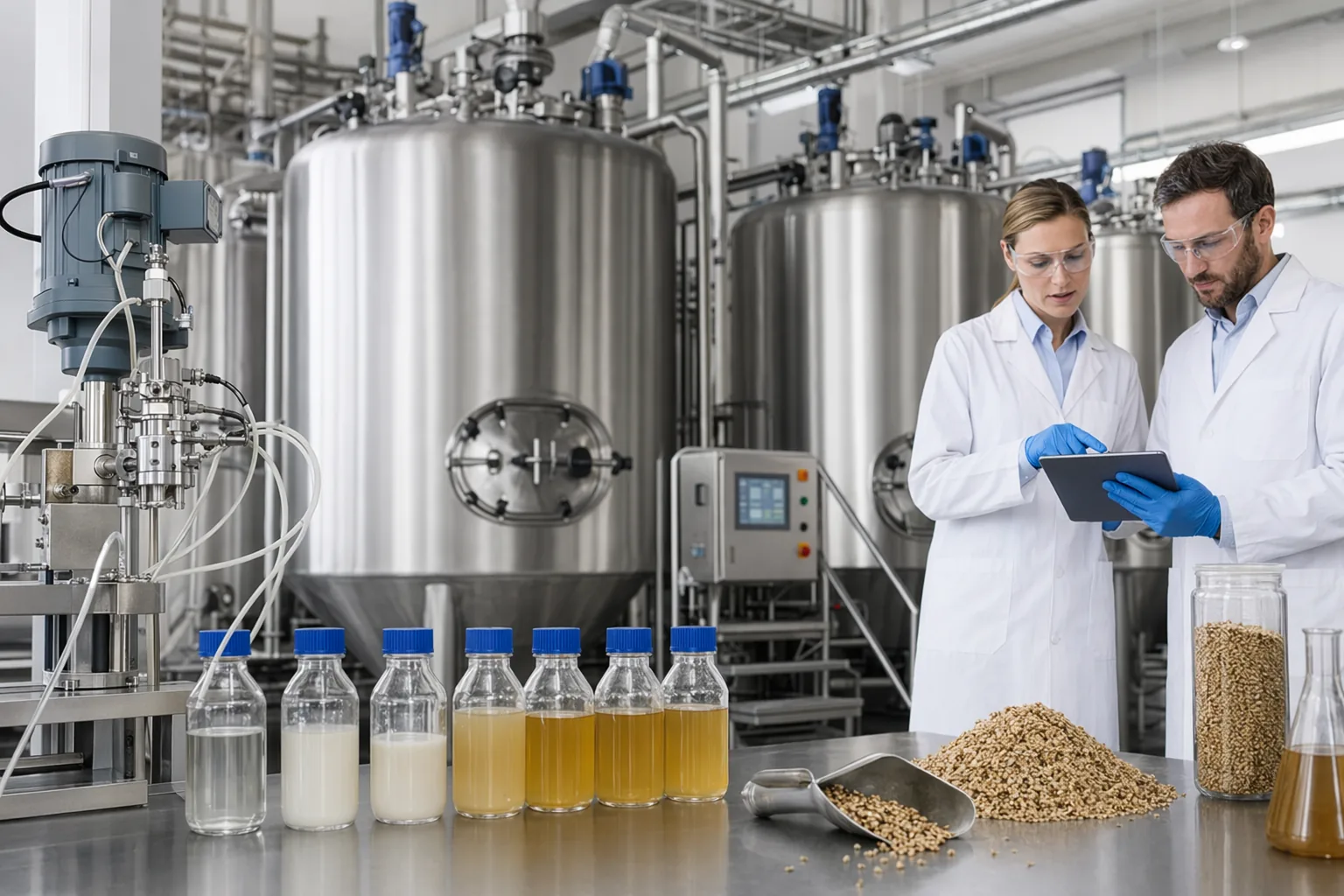
In the application area of acid protease enzymes for alcohol production, the goal is practical: release soluble nitrogen, reduce protein-related viscosity, and support stable fermentation economics.
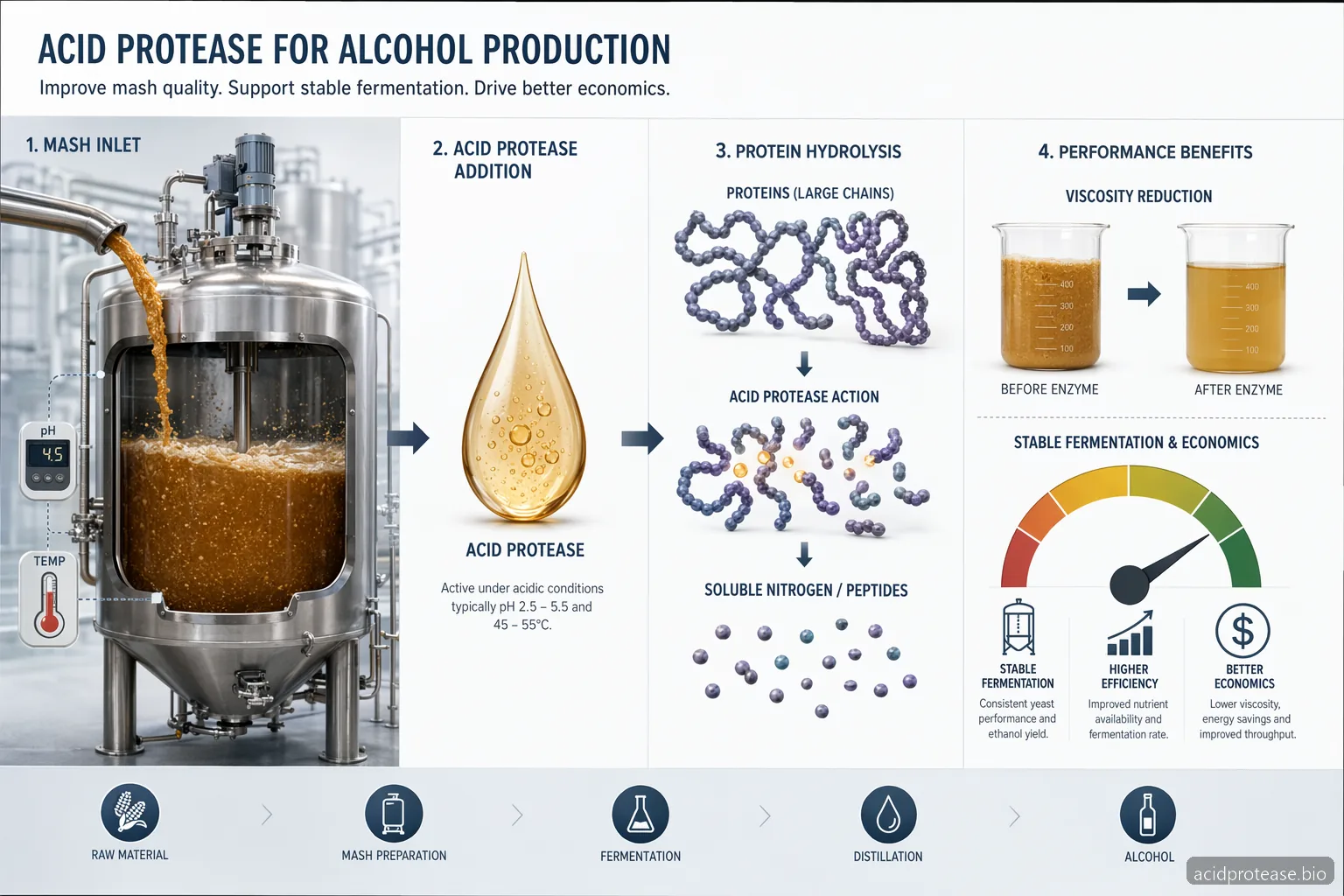
Why Acid Protease Matters in Alcohol Fermentation
Acid protease enzyme products are used in alcohol production to hydrolyze grain, tuber, or other plant proteins into smaller peptides and amino nitrogen. In starch-based ethanol or beverage alcohol processes, this can improve nutrient availability for yeast and help reduce protein-related mash viscosity. The main value is not a single universal yield claim, but a more controllable fermentation profile when the substrate is protein-rich or variable. A fungal acid protease is often selected because many fungal proteases show useful activity under acidic mash conditions. For B2B buyers, the relevant question is whether the enzyme improves the plant’s actual process: raw material flexibility, fermentation kinetics, residual protein management, foam tendency, or downstream separation. The best purchasing decision is based on side-by-side trials with your substrate, yeast, pH program, temperature profile, and residence time.
Supports amino nitrogen release from protein-containing raw materials • Can help manage viscosity and suspended protein behavior • Fits acidic mash or fermentation conditions better than neutral proteases • Requires validation against plant-specific economics
Recommended Process Conditions and Dosing Approach
A typical acid protease application starts with a defined pH and temperature window from the supplier’s TDS. Many industrial acid protease products perform in the pH 3.0-5.5 range, with common process temperatures between 35°C and 60°C. Some acid stable protease formulations tolerate lower pH or longer acidic hold times, but activity loss should be tested under actual mash chemistry. Initial screening dosages often fall in a broad band such as 50-500 g per metric ton of dry substrate for concentrated commercial products, or as otherwise stated by activity units on the TDS. Start with a dosage ladder rather than a single point. Measure soluble nitrogen, free amino nitrogen, viscosity, fermentation rate, residual sugar, ethanol concentration, and distillation impacts. The final dose should be set by marginal benefit versus enzyme cost, not by maximum hydrolysis alone.
Screen at pH 3.0-5.5 unless the TDS specifies otherwise • Evaluate 35-60°C depending on hold time and process stage • Use dosage ladders to identify cost-in-use optimum • Confirm compatibility with yeast, glucoamylase, and process chemicals
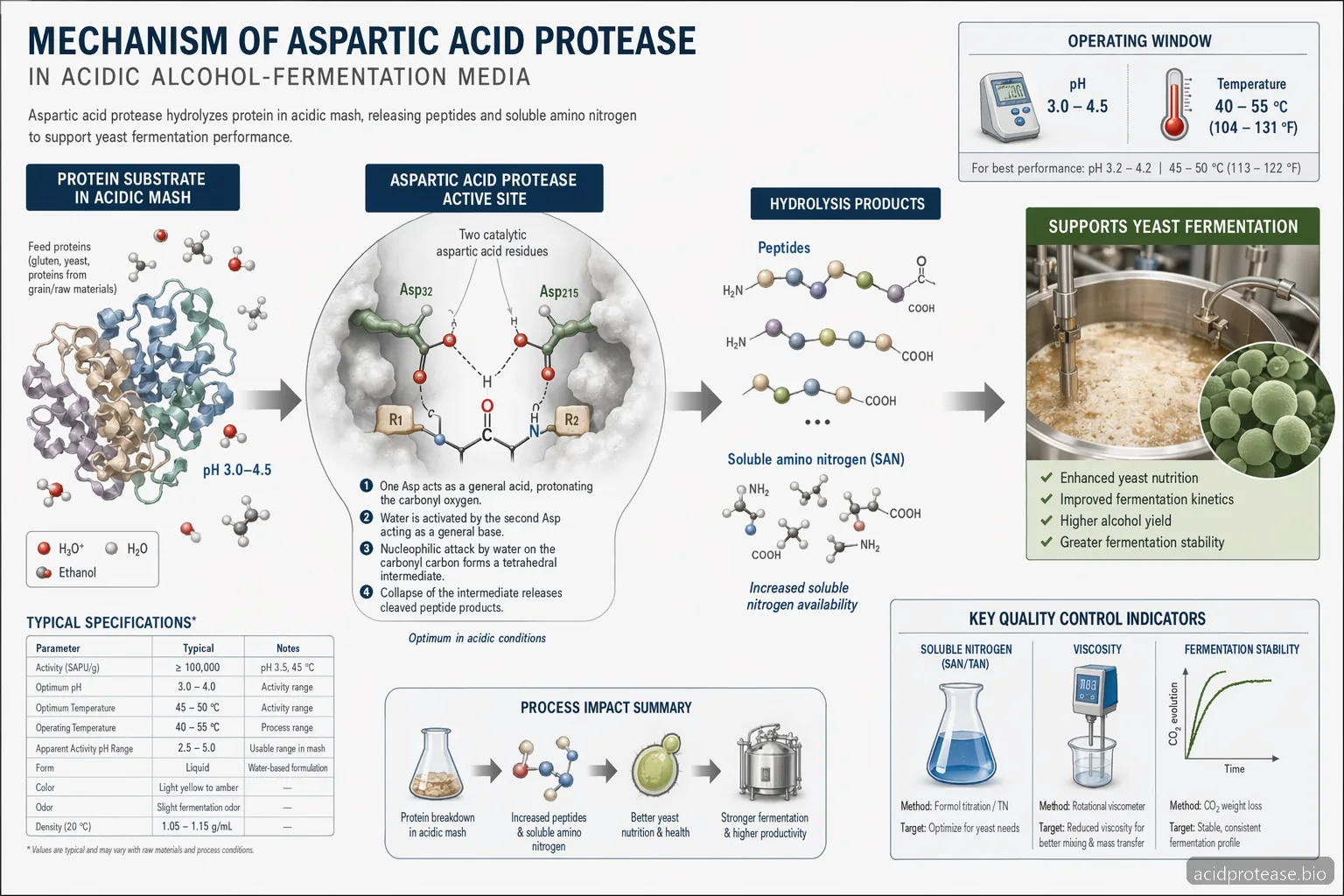
Mechanism: Aspartic Acid Protease in Acidic Media
Many commercial acid protease products are based on aspartic acid protease activity. The aspartic acid protease mechanism typically involves catalytic aspartate residues that activate water for peptide bond hydrolysis under acidic conditions. This is different from serine proteases such as TEV protease; a tev protease amino acid sequence is useful in molecular biology discussions but is not normally relevant to bulk alcohol production enzyme purchasing. For industrial users, the important technical points are substrate specificity, acid tolerance, thermal stability, and activity retention in the real mash matrix. The term protease amino acid can refer to the enzyme’s own amino acid sequence or to amino acids released from substrate proteins. In alcohol production, the practical target is released amino nitrogen and peptide profile that can support yeast nutrition without creating negative downstream processing effects.
Aspartic acid protease activity is well suited to acidic processing • Mechanism supports peptide bond cleavage at low pH • Sequence data is less important than verified process performance • Measure released nitrogen rather than assuming benefit from enzyme name
Quality Control Checks for Plant Trials
Before scaling an acid protease supplier into routine production, run a controlled pilot or plant trial with clear baseline data. The enzyme lot should be accompanied by a COA showing activity, appearance, batch number, and relevant specification limits. The TDS should state activity definition, recommended pH and temperature, dosage guidance, carrier or formulation type, storage conditions, and shelf-life expectations. The SDS should be reviewed by EHS teams for handling, dust or aerosol precautions, and spill response. In the trial, collect mash pH, temperature, viscosity, soluble protein, free amino nitrogen, fermentation time, residual sugar, ethanol yield, by-product profile if monitored, and any impact on centrifugation, filtration, evaporation, or distillation. Repeat testing across at least two raw material lots is recommended because grain protein quality and moisture can change enzyme response.
Request COA, TDS, and SDS before pilot use • Track both biochemical and operational KPIs • Test across realistic raw material variation • Document handling and storage performance
Supplier Qualification and Cost-in-Use
Selecting an acid protease supplier for alcohol production should combine technical fit, supply reliability, and total cost-in-use. A low price per kilogram may not be competitive if activity is low, dosage is high, storage stability is weak, or technical support is limited. Ask suppliers for batch-to-batch activity consistency, lead time, minimum order quantity, packaging options, allergen or processing aid statements where applicable, and documentation aligned with your procurement and EHS requirements. Avoid relying on broad claims such as “higher yield” without test data from your substrate. Instead, calculate enzyme cost per kiloliter of alcohol, change in fermentation time, nutrient replacement potential, energy or separation impact, and any quality effect. A qualified supplier should help interpret pilot data, recommend dosage refinement, and support scale-up without overstating results beyond validated conditions.
Compare delivered activity, not only product weight • Calculate cost per unit of alcohol produced • Confirm supply continuity and batch consistency • Require transparent technical documentation
Technical Buying Checklist
Buyer Questions
An acid stable protease is a protease that retains useful activity and structure under acidic process conditions. In alcohol production, this matters because mashes and fermentations often operate below neutral pH. The practical definition should come from supplier data and your own trial: activity at target pH, stability over the planned hold time, and measurable benefits such as amino nitrogen release or viscosity reduction.
The phrase “does hydrochloric acid and protease solution appear in enzymes” mixes process chemistry with enzyme formulation. Hydrochloric acid may be used by a plant to adjust pH, but it is not the enzyme itself. A protease solution contains the enzyme protein plus water and formulation components. Always check the SDS and TDS to understand composition, pH, handling requirements, and compatibility with your process.
Validate dosage with a ladder trial using your real substrate and operating conditions. Include an untreated control and at least three enzyme levels. Track free amino nitrogen, soluble protein, viscosity, fermentation time, residual sugars, ethanol concentration, and downstream handling. The selected dosage should be the point where additional enzyme no longer provides enough operational or economic benefit to justify the added cost.
Fungal acid protease can be suitable for both fuel ethanol and beverage alcohol processes, provided the product is appropriate for the intended use and regulatory context. Suitability depends on pH, temperature, substrate protein, formulation, and documentation. For beverage alcohol, buyers should request relevant food-processing statements from the supplier and confirm local compliance requirements before commercial use.
Acid protease for alcohol production is a bulk industrial enzyme used to hydrolyze substrate proteins under acidic process conditions. TEV protease is a highly specific molecular biology tool used to cleave engineered fusion proteins at defined sequences. A tev protease amino acid sequence is not a normal purchasing criterion for alcohol plants. Industrial selection should focus on activity, stability, cost-in-use, and process results.
Related Search Themes
does hydrochloric acid and protease solution appear in enzymes, aspartic acid protease mechanism, aspartic acid protease, tev protease amino acid sequence, acid stable protease, acid protease
Acid Protease for Research & Industry
Need Acid Protease for your lab or production process?
ISO 9001 certified · Food-grade & research-grade · Ships to 80+ countries
Frequently Asked Questions
What is acid stable protease in alcohol production?
An acid stable protease is a protease that retains useful activity and structure under acidic process conditions. In alcohol production, this matters because mashes and fermentations often operate below neutral pH. The practical definition should come from supplier data and your own trial: activity at target pH, stability over the planned hold time, and measurable benefits such as amino nitrogen release or viscosity reduction.
Does hydrochloric acid and protease solution appear in enzymes?
The phrase “does hydrochloric acid and protease solution appear in enzymes” mixes process chemistry with enzyme formulation. Hydrochloric acid may be used by a plant to adjust pH, but it is not the enzyme itself. A protease solution contains the enzyme protein plus water and formulation components. Always check the SDS and TDS to understand composition, pH, handling requirements, and compatibility with your process.
How should an acid protease dosage be validated?
Validate dosage with a ladder trial using your real substrate and operating conditions. Include an untreated control and at least three enzyme levels. Track free amino nitrogen, soluble protein, viscosity, fermentation time, residual sugars, ethanol concentration, and downstream handling. The selected dosage should be the point where additional enzyme no longer provides enough operational or economic benefit to justify the added cost.
Is fungal acid protease suitable for fuel ethanol and beverage alcohol?
Fungal acid protease can be suitable for both fuel ethanol and beverage alcohol processes, provided the product is appropriate for the intended use and regulatory context. Suitability depends on pH, temperature, substrate protein, formulation, and documentation. For beverage alcohol, buyers should request relevant food-processing statements from the supplier and confirm local compliance requirements before commercial use.
How is acid protease different from TEV protease?
Acid protease for alcohol production is a bulk industrial enzyme used to hydrolyze substrate proteins under acidic process conditions. TEV protease is a highly specific molecular biology tool used to cleave engineered fusion proteins at defined sequences. A tev protease amino acid sequence is not a normal purchasing criterion for alcohol plants. Industrial selection should focus on activity, stability, cost-in-use, and process results.
Related: Acid Protease for Acidic Processing Lines
Turn This Guide Into a Supplier Brief Request acid protease specifications, samples, and pilot-trial support for your alcohol production process. See our application page for Acid Protease for Acidic Processing Lines at /applications/acid-protease-acidic-processing/ for specs, MOQ, and a free 50 g sample.
Contact Us to Contributehello@mail.acidprotease.bio