Process Kinetics of Acid Protease Production by Aspergillus niger
Compare acid protease from Aspergillus niger for alcohol production: kinetics, specs, COA/TDS/SDS checks, pilot dosing, and supplier qualification.
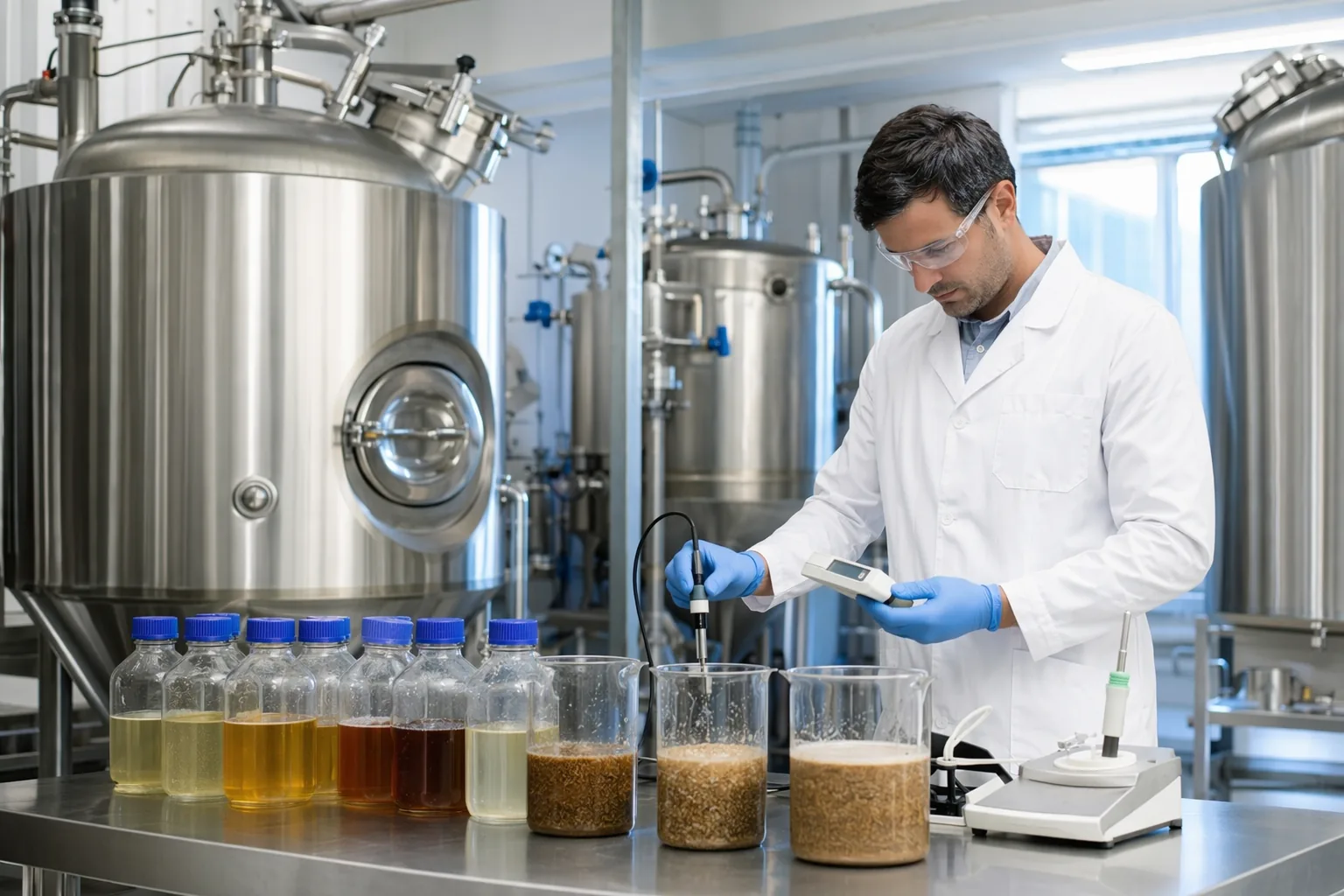
A practical B2B checklist for comparing fungal acid protease specifications, production kinetics, and supplier readiness for acidic alcohol-production processes.
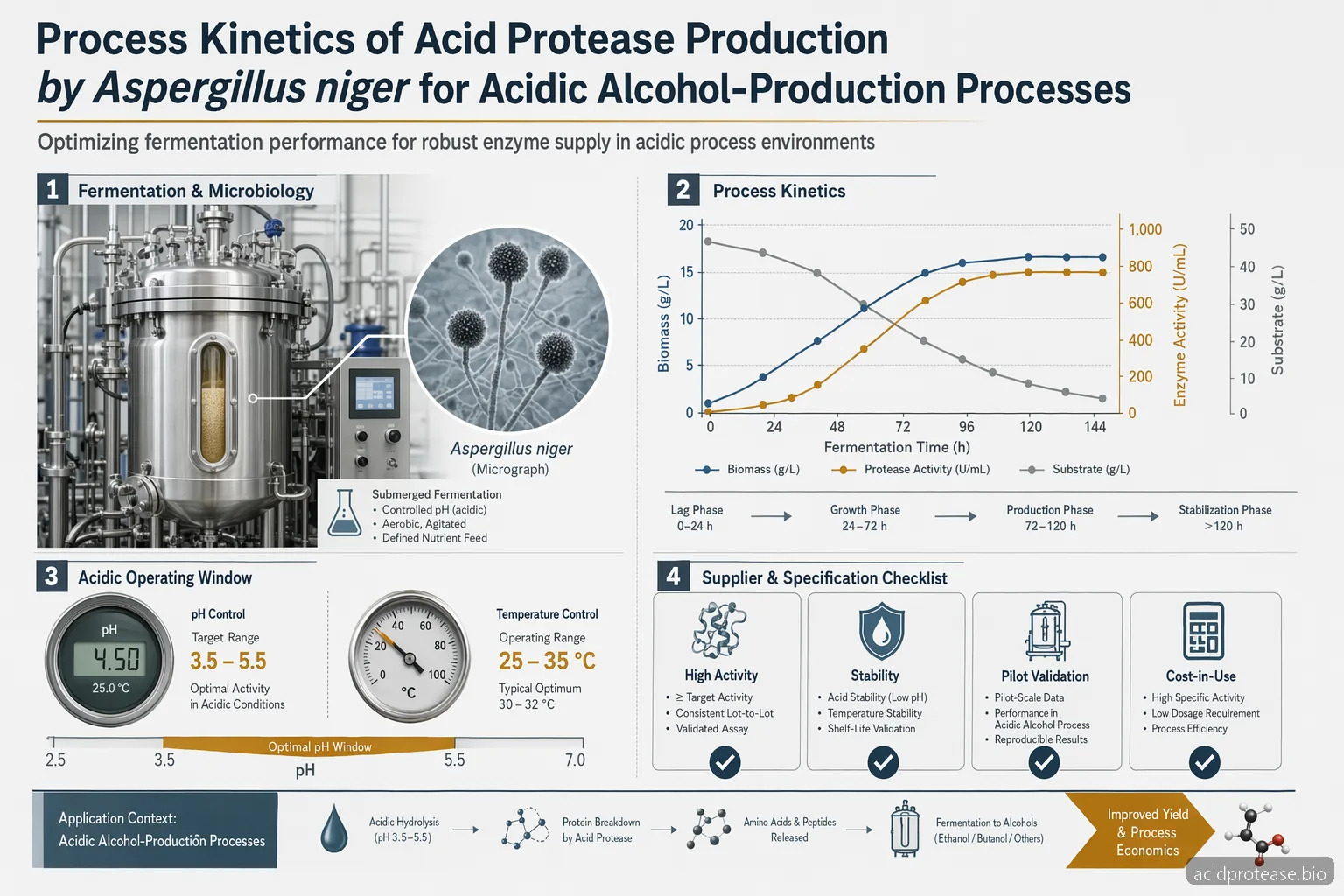
Why production kinetics matter to industrial buyers
The process kinetics of acid protease production by Aspergillus niger help buyers understand how consistently a supplier can manufacture enzyme activity at scale. In practical sourcing, kinetic information is not requested for academic interest only; it indicates whether fermentation time, carbon and nitrogen utilization, pH drift, and downstream recovery are under control. A robust supplier should be able to explain typical fermentation windows, in-process activity tracking, contamination controls, and how the final product is standardized. For alcohol production, this matters because under-strength or variable acid protease can change free amino nitrogen release, viscosity behavior, and fermentation predictability. Buyers comparing acid protease production routes should ask whether the enzyme is produced by submerged fermentation, how activity is defined, and how lots are blended or concentrated. Published studies, including work such as Oyeleke et al. 2010 on acid protease by Aspergillus fumigatus, can provide useful context, but they do not replace supplier-specific COA and pilot validation.
Request activity trend data or batch consistency summaries. • Confirm the assay pH and temperature used for activity reporting. • Separate research strain data from commercial production data.
Comparing Aspergillus niger, Aspergillus oryzae, and other fungal sources
Acid protease from Aspergillus niger is often selected for acidic protein hydrolysis because fungal proteases can operate in the pH range typical of grain mashes and acidic saccharification systems. Aspergillus oryzae acid protease may also be suitable, depending on the activity profile, regulatory status for the target market, and impurity controls. Buyers should avoid selecting a source organism by name alone. Instead, compare the commercial enzyme’s pH optimum, useful activity range, temperature stability, side activities, carrier system, and performance in the actual feedstock. A fungal acid protease that performs well on soluble casein in a lab assay may behave differently in corn, sorghum, wheat, cassava, or mixed grain slurry. When evaluating an industrial acid protease enzyme for alcohol production, the best comparison is side-by-side testing against the incumbent enzyme under the same mash solids, pH, temperature, hold time, and fermentation conditions.
Typical useful pH screening range: pH 2.8–5.0. • Typical process temperature screening range: 35–60°C. • Compare by delivered activity, not only product weight.
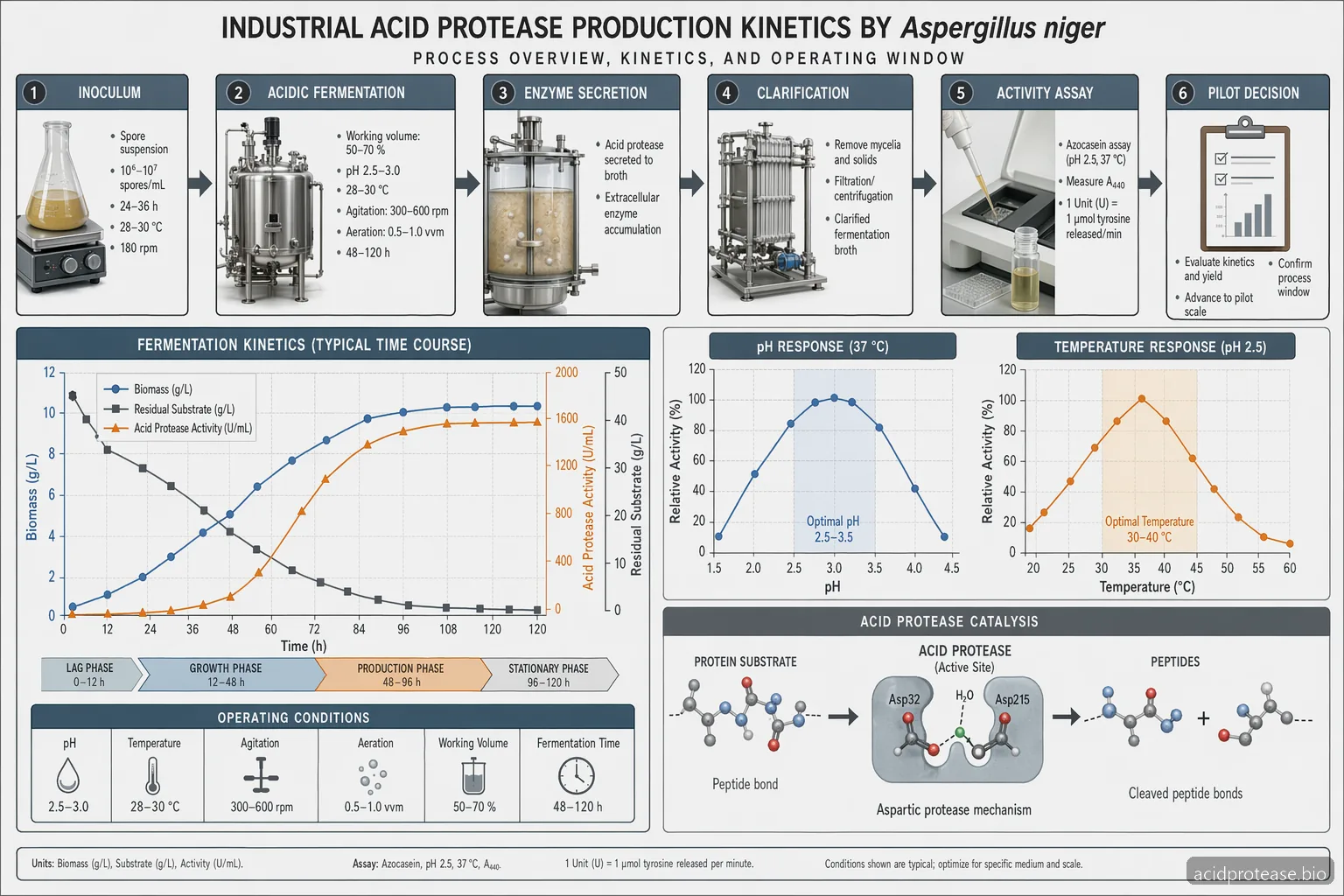
Specification checklist for alcohol production
An acid protease supplier for alcohol production should provide a specification that connects enzyme activity to plant conditions. The TDS should state enzyme type, source, activity unit definition, recommended pH and temperature range, dosage guidance, storage, shelf life, and compatibility notes. The COA should confirm lot-specific activity, appearance, moisture or dry matter where relevant, microbiological limits when applicable, and any declared carriers or preservatives. The SDS should cover handling, dust or aerosol precautions, personal protective equipment, spill response, and storage. For a first plant trial, buyers commonly screen a dosage band such as 0.005–0.05% w/w on dry substrate, or an equivalent activity-based range defined by the supplier, then adjust based on FAN release, fermentation performance, and cost-in-use. The goal is not maximum proteolysis at any cost; it is reliable hydrolysis that supports yeast nutrition and process stability without creating avoidable expense.
Ask for COA, TDS, SDS, and activity assay method. • Use activity-normalized dosing for fair supplier comparison. • Track FAN, residual protein, viscosity, and fermentation endpoints.
Pilot validation: from lab assay to plant decision
Pilot validation should reproduce the alcohol plant’s real operating constraints rather than idealized enzyme conditions. Set mash solids, pH, temperature ramp, acid hold, saccharification time, yeast strain, and nutrient additions to match the intended process. Include a no-protease control, the current commercial enzyme if available, and at least two dosage points for the candidate acid protease. Sampling should measure free amino nitrogen, soluble peptides, viscosity or flow behavior where relevant, fermentation rate, residual sugars, alcohol concentration, and any off-spec observations. If the plant uses simultaneous saccharification and fermentation, confirm that the protease remains useful under the chosen fermentation pH and temperature, often around pH 3.5–4.8 and 28–35°C. For high-temperature acidic holds, confirm short-term stability before assuming activity persists. A successful pilot should generate a dosage recommendation, cost-in-use estimate, handling requirements, and clear pass/fail criteria for procurement.
Run controls and at least two candidate dosage levels. • Measure process outcomes, not only lab activity. • Convert trial data into cost per unit of alcohol produced.
Supplier qualification and cost-in-use comparison
A low price per kilogram does not automatically make the best industrial acid protease alcohol production option. Procurement teams should compare total delivered activity, recommended dosage, freight, storage stability, packaging loss, ease of metering, technical support, and risk of batch variation. Supplier qualification should include documentation review, sample testing, pilot results, commercial references where available, and an agreed change-notification process for formulation or production-site changes. For an acid protease supplier, reliability also includes practical support: fast COA access, clear lead times, responsive troubleshooting, and the ability to discuss enzyme behavior in acidic grain mash. If two products perform similarly, choose the supplier that provides better transparency on activity method, lot consistency, and handling. Cost-in-use should be calculated from verified plant dosage and performance, not from catalog activity alone, because assay conditions may not match the plant environment.
Compare cost by effective activity in the mash. • Confirm lead time, packaging, storage, and shelf life. • Require notification for material specification changes.
Technical Buying Checklist
Buyer Questions
Not automatically. Acid protease from Aspergillus niger can be a strong candidate for acidic grain processing, but performance depends on the commercial enzyme’s activity profile, stability, formulation, and impurity controls. Compare it with Aspergillus oryzae acid protease or other fungal acid proteases using the same mash, pH, temperature, hold time, and fermentation conditions. The best product is the one with verified plant performance and favorable cost-in-use.
Academic data on acid protease production, including studies such as Oyeleke et al. 2010 acid protease by Aspergillus fumigatus, can help frame questions about fermentation time, pH, substrate effects, and activity development. However, it should not be treated as a commercial specification. Industrial buyers should request supplier-specific COA, TDS, SDS, activity method, batch consistency information, and pilot samples before approving an enzyme for alcohol production.
A practical starting screen is often around 0.005–0.05% w/w on dry substrate, or an equivalent activity-based range from the supplier. The correct dosage depends on grain type, protein level, mash solids, pH, temperature, residence time, and the desired FAN increase. Run at least two dosage points plus controls, then calculate cost-in-use from verified fermentation outcomes rather than relying only on catalog activity.
A qualified industrial acid protease supplier should provide a current COA for the lot, a TDS describing activity unit, pH and temperature guidance, dosage and storage, and an SDS covering safe handling. Buyers may also request shelf-life data, allergen or carrier declarations where relevant, regulatory statements for the destination market, and written notification procedures for formulation, production-site, or specification changes.
The main risk is comparing products by label activity without confirming assay conditions and mash performance. One supplier may report activity at a different pH, temperature, or substrate than another, making catalog numbers misleading. Normalize comparisons by activity method, run side-by-side pilot trials, and track practical endpoints such as FAN release, viscosity, fermentation rate, residual sugars, and cost per unit of alcohol produced.
Related Search Themes
acid protease from aspergillus niger, acid protease production, oyeleke et al 2010 acid protease by aspergillus fumigatus, industrial acid protease supplier alcohol production, industrial acid protease enzyme alcohol production, industrial acid protease alcohol production
Acid Protease for Research & Industry
Need Acid Protease for your lab or production process?
ISO 9001 certified · Food-grade & research-grade · Ships to 80+ countries
Frequently Asked Questions
Is acid protease from Aspergillus niger always better for alcohol production?
Not automatically. Acid protease from Aspergillus niger can be a strong candidate for acidic grain processing, but performance depends on the commercial enzyme’s activity profile, stability, formulation, and impurity controls. Compare it with Aspergillus oryzae acid protease or other fungal acid proteases using the same mash, pH, temperature, hold time, and fermentation conditions. The best product is the one with verified plant performance and favorable cost-in-use.
How should we interpret academic kinetics data for supplier selection?
Academic data on acid protease production, including studies such as Oyeleke et al. 2010 acid protease by Aspergillus fumigatus, can help frame questions about fermentation time, pH, substrate effects, and activity development. However, it should not be treated as a commercial specification. Industrial buyers should request supplier-specific COA, TDS, SDS, activity method, batch consistency information, and pilot samples before approving an enzyme for alcohol production.
What dosage of industrial acid protease enzyme should we test first?
A practical starting screen is often around 0.005–0.05% w/w on dry substrate, or an equivalent activity-based range from the supplier. The correct dosage depends on grain type, protein level, mash solids, pH, temperature, residence time, and the desired FAN increase. Run at least two dosage points plus controls, then calculate cost-in-use from verified fermentation outcomes rather than relying only on catalog activity.
Which documents should an acid protease supplier provide?
A qualified industrial acid protease supplier should provide a current COA for the lot, a TDS describing activity unit, pH and temperature guidance, dosage and storage, and an SDS covering safe handling. Buyers may also request shelf-life data, allergen or carrier declarations where relevant, regulatory statements for the destination market, and written notification procedures for formulation, production-site, or specification changes.
What is the main QC risk when comparing acid protease suppliers?
The main risk is comparing products by label activity without confirming assay conditions and mash performance. One supplier may report activity at a different pH, temperature, or substrate than another, making catalog numbers misleading. Normalize comparisons by activity method, run side-by-side pilot trials, and track practical endpoints such as FAN release, viscosity, fermentation rate, residual sugars, and cost per unit of alcohol produced.
Related: Acid Protease for Acidic Processing Lines
Turn This Guide Into a Supplier Brief Request an acid protease COA/TDS/SDS review and pilot-sample plan for your alcohol-production process. See our application page for Acid Protease for Acidic Processing Lines at /applications/acid-protease-acidic-processing/ for specs, MOQ, and a free 50 g sample.
Contact Us to Contributehello@mail.acidprotease.bio